

40 Rare Vietnam Photos
The Vietnam War was a conflict that spanned over a decade in the ’60s and ’70s that left an estimated millions dead. The conflict, fought between North Vietnam and South Vietnam, attracted support from outside countries—with the United States taking the side of South Vietnam and communist countries like the Soviet Union and China supporting the northern soldiers. While North Vietnam ultimately won the war, the massive bloodshed on both sides paints the picture of a conflict that ended with only losers, no winners.
As photographic technology began to advance during this era, pictures became an important part of telling the story of the Vietnam War. They were able to capture the horror, strife, and grief in a way that words never could. While some of these photographs would go on to become emblematic of this conflict, such as the disturbing and award-winning “Napalm Girl,” others didn’t receive as much attention, even though they were just as important in telling the story of this bloody war. Here are 40 of those photos.
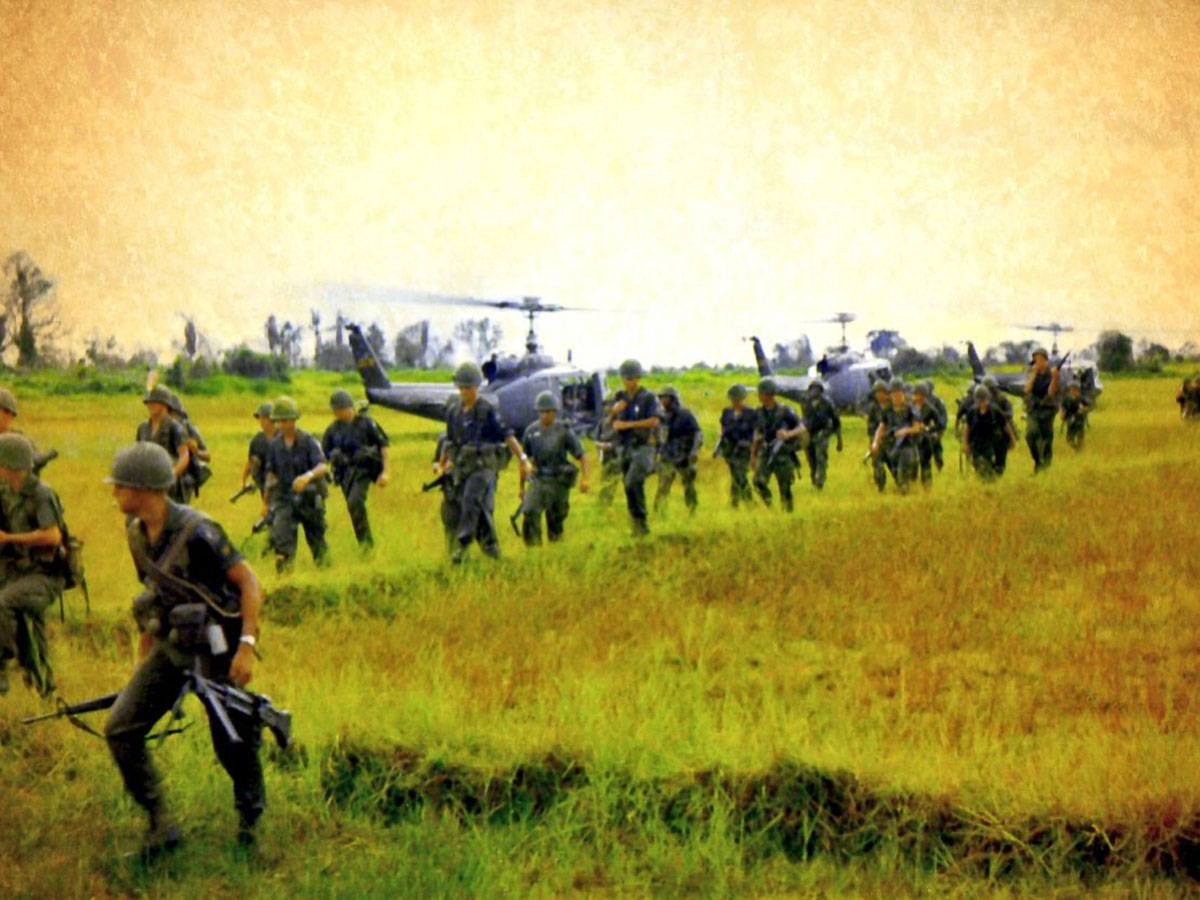
Mission in War Zone D
Date: Unknown
Soldiers walk away from helicopters in War Zone D, an area located in the designation III Corps that was northeast of Saigon. The area was the site of many U.S. actions early during the Vietnam War as a means of extending control out from the greater Saigon region.
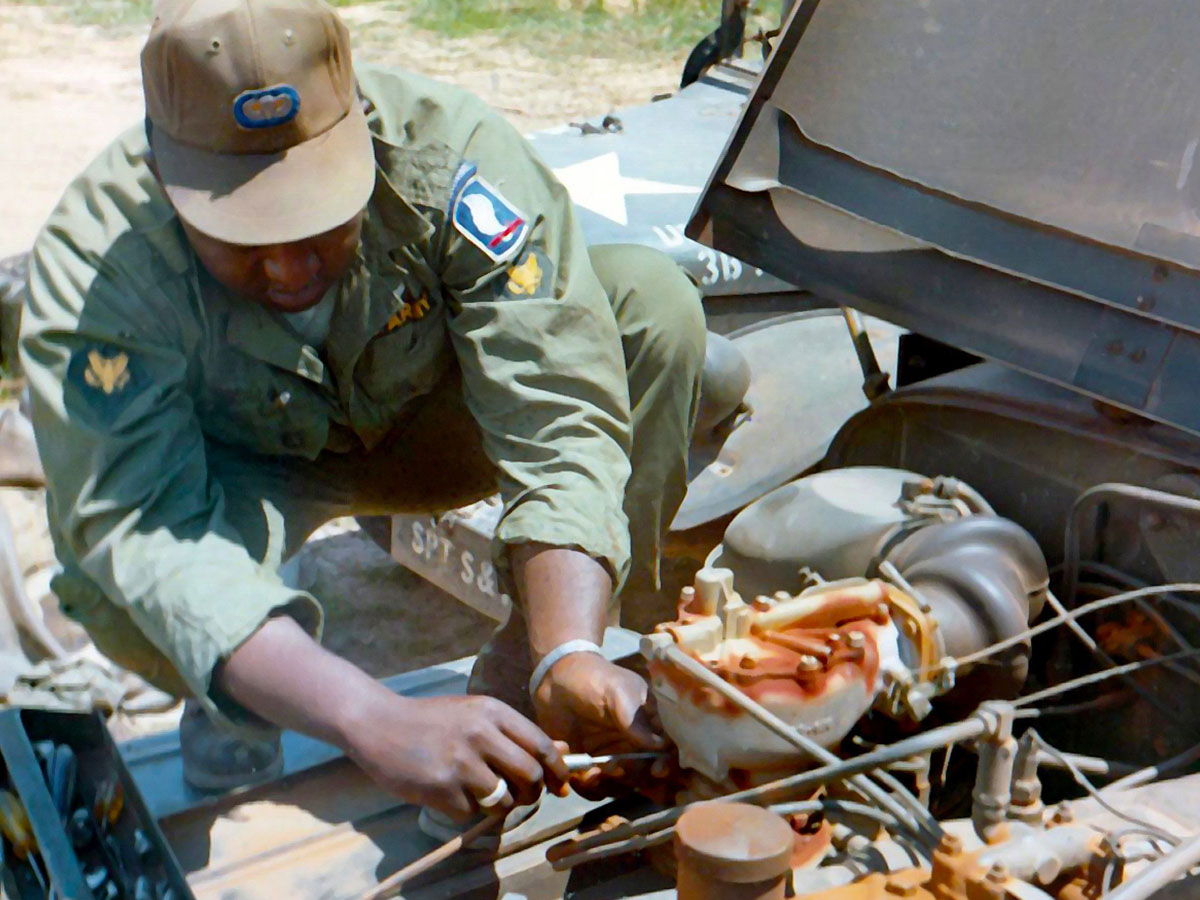
Truck Maintenance
Date: Unknown
A soldier performs maintenance under the hood of a faulty vehicle in South Vietnam.
Soliders Arrive at Qui Nhon

Date: Unknown
Soldiers disembark from an LCVP (landing craft, vehicle, personnel) or Higgins boat in Qui Nhon, South Vietnam.
Military Police Headquarters in Saigon

Date: Unknown
Soldiers stand outside of military police headquarters in Saigon.
USS Boxer Arrives at Qui Nhon

Date: 1966
USS Boxer (CV-21) arrives at Qui Nhon during its second trip to Vietnam transporting Marine Corps aircraft to South Vietnam. The ship was only used as a transport vessel and did not see any combat action during the war. Later in the year, the ship served as a pickup ship for NASA spacecraft after they splashed down in the ocean.
Montagnard Ceremony at Ban Me Thout

Date: Unknown
Soldiers participate in a Montagnard Ceremony at Ban Me Thout. The Montagnard Ceremony is a cultural event held by the Montagnard people, an indigenous group in Vietnam. The ceremony is a celebration of their heritage, traditions, and way of life. It typically involves various cultural performances, such as traditional dances, music, and ceremonies.
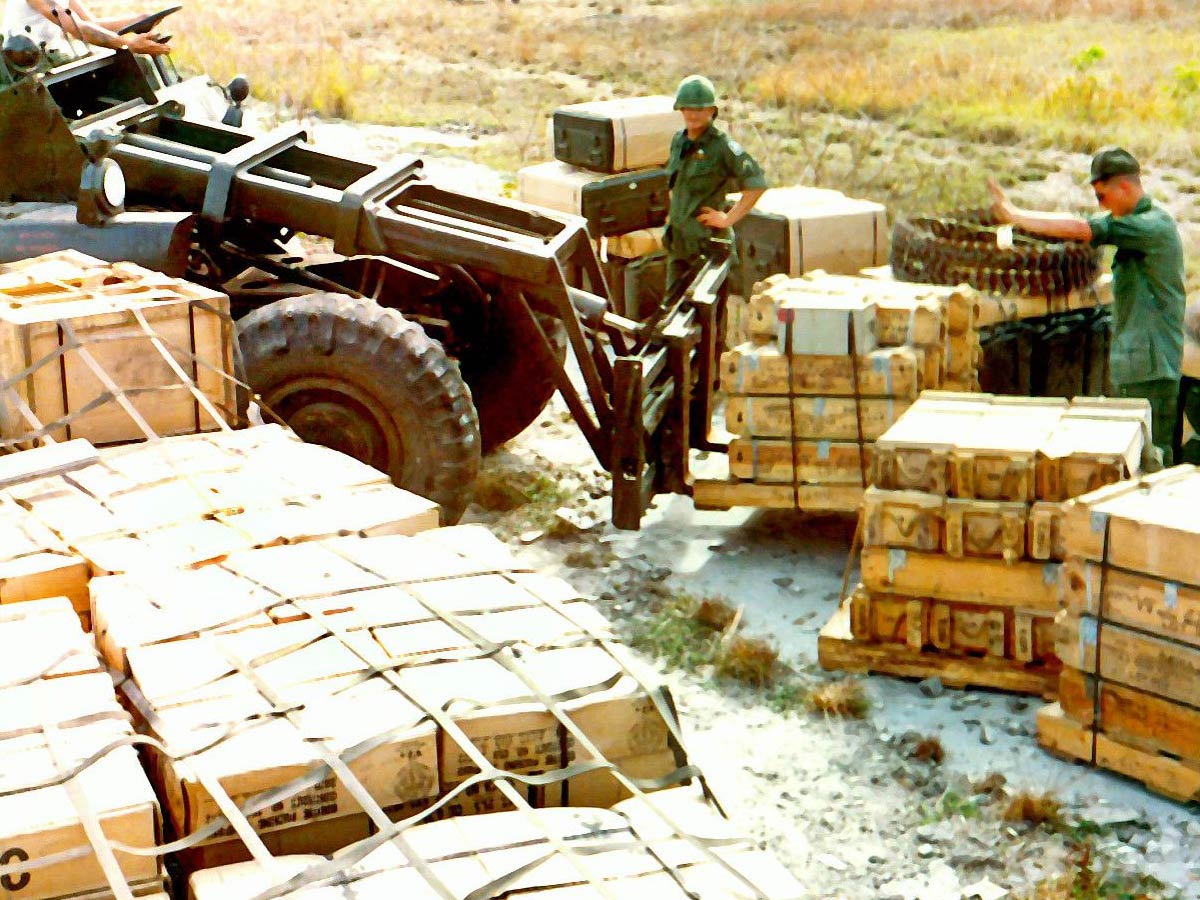
Unloading Supplies at Bien Hoa
Date: Unknown
Soldiers unload palettes of supplies using a forklift at Bien Hoa Air Base, the largest air base in the country. At one time, it was the joint operating base for both the USAFand RVNAF (Republic of Vietnam Air Force, aka South Vietnam).
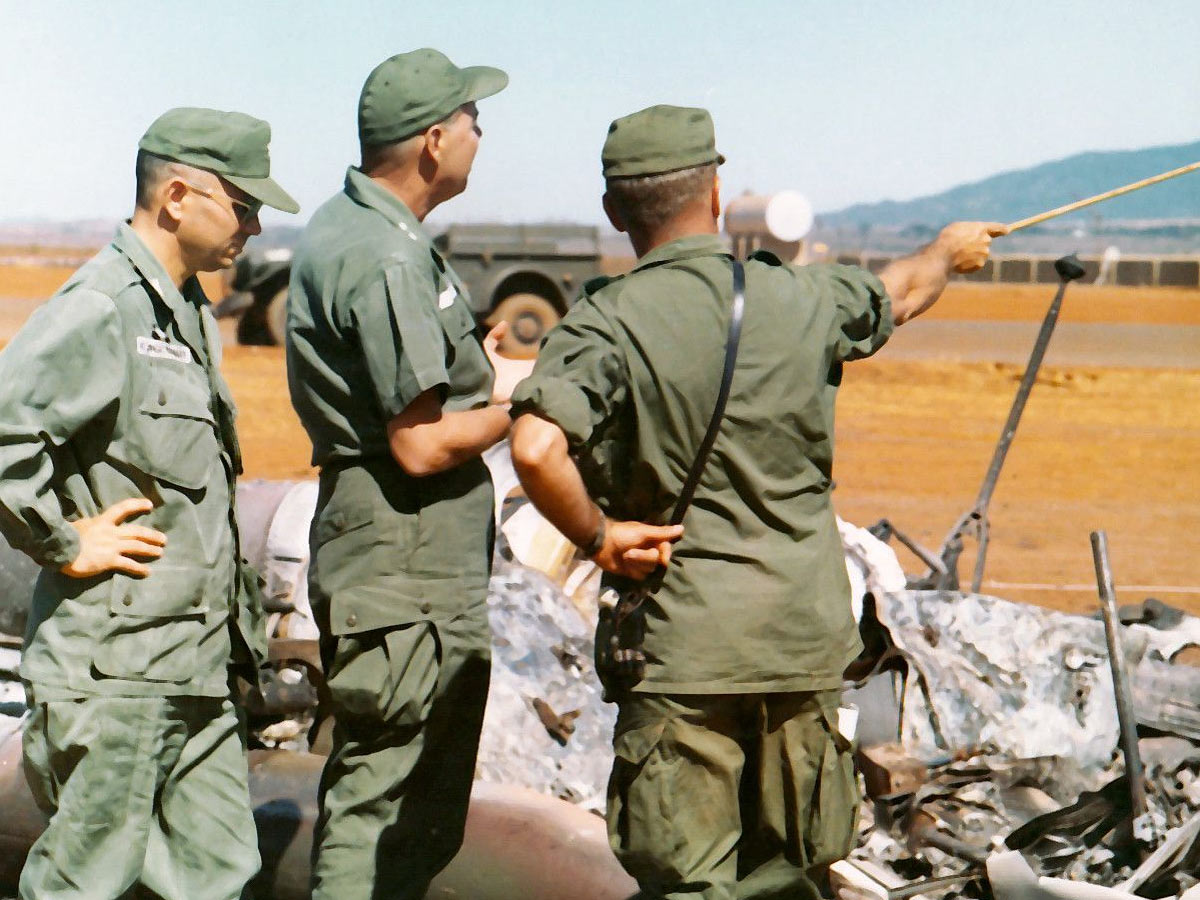
U.S. Commanders Survey Damage After Halloway Attack
Date: 1967
U.S. commanders point out damage after the Halloway Attack. This was a significant incident during the Vietnam War that occurred on April 12, 1967. It involved the accidental bombing of a U.S. naval vessel, the USS Halsey-Powell, by a U.S. Air Force F-4 Phantom II fighter jet. It resulted in the deaths of 34 U.S. sailors. The incident prompted a thorough investigation by the U.S. military, which concluded that the bombing was accidental due to a series of errors and miscommunications.
Preparing for a Mission in War Zone 6

Date: Unknown
A soldier paints a fellow soldier’s face in preparation for a mission.
Intensive Care on USS Repose
Date: October 1967
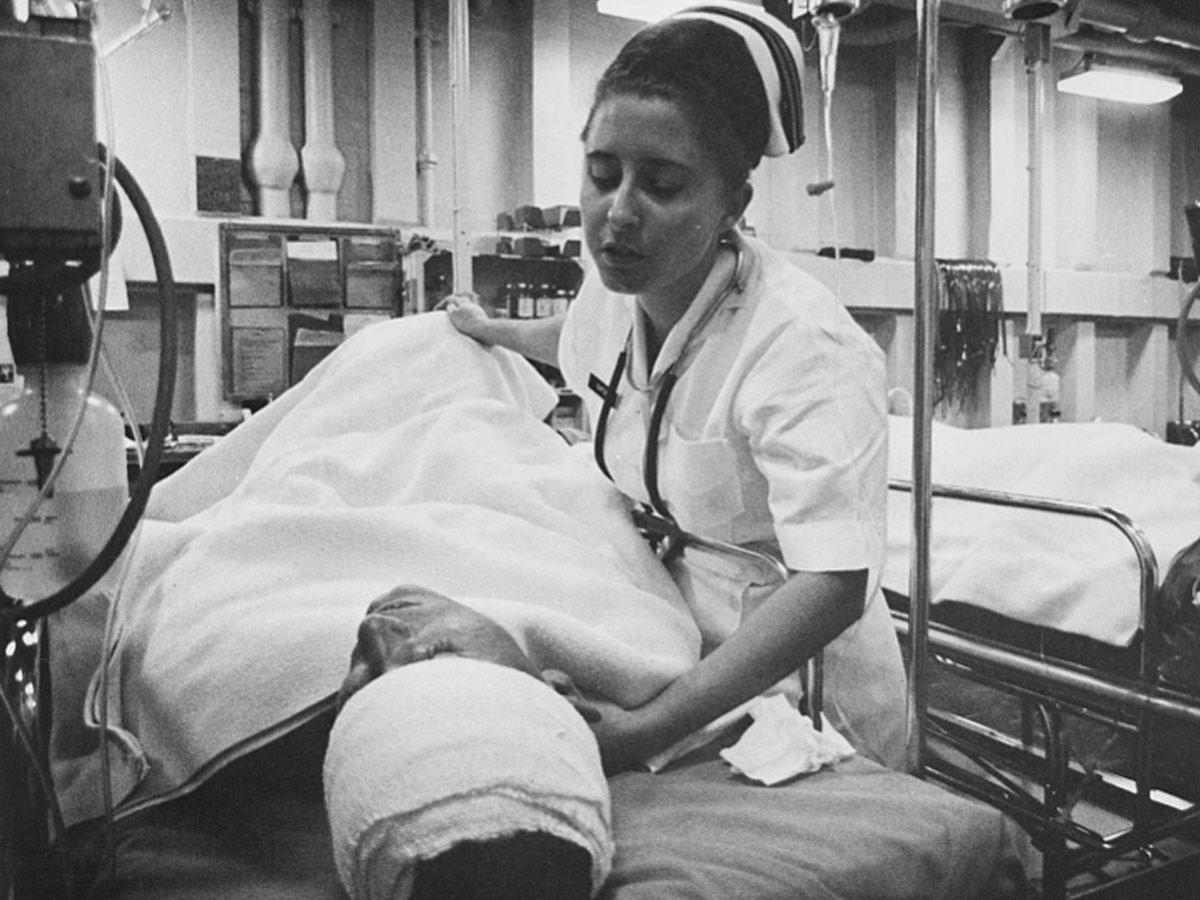
A nurse tends a patient just out of surgery in the intensive care ward of the hospital ship USS Repose (AH-16). The ship is steaming off the coast of Vietnam in the South China Sea a few miles south of the 17th parallel.
Aboard the USS Repose Near South Vietnam

Date: April 22, 1966
Lieutenant Commander Dorothy Ryan checks the medical chart of Marine Corporal Roy Hadaway of Calera, Alabama, aboard the hospital ship USS Repose (AH-16) off South Vietnam. Miss Ryan, from Bronx, New York, is one of 29 nurses aboard the hospital ship selected from 500 volunteers of the Navy Nurse Corps.
Red Cross Volunteer Playing Cards with Marine
Date: August 2, 1967
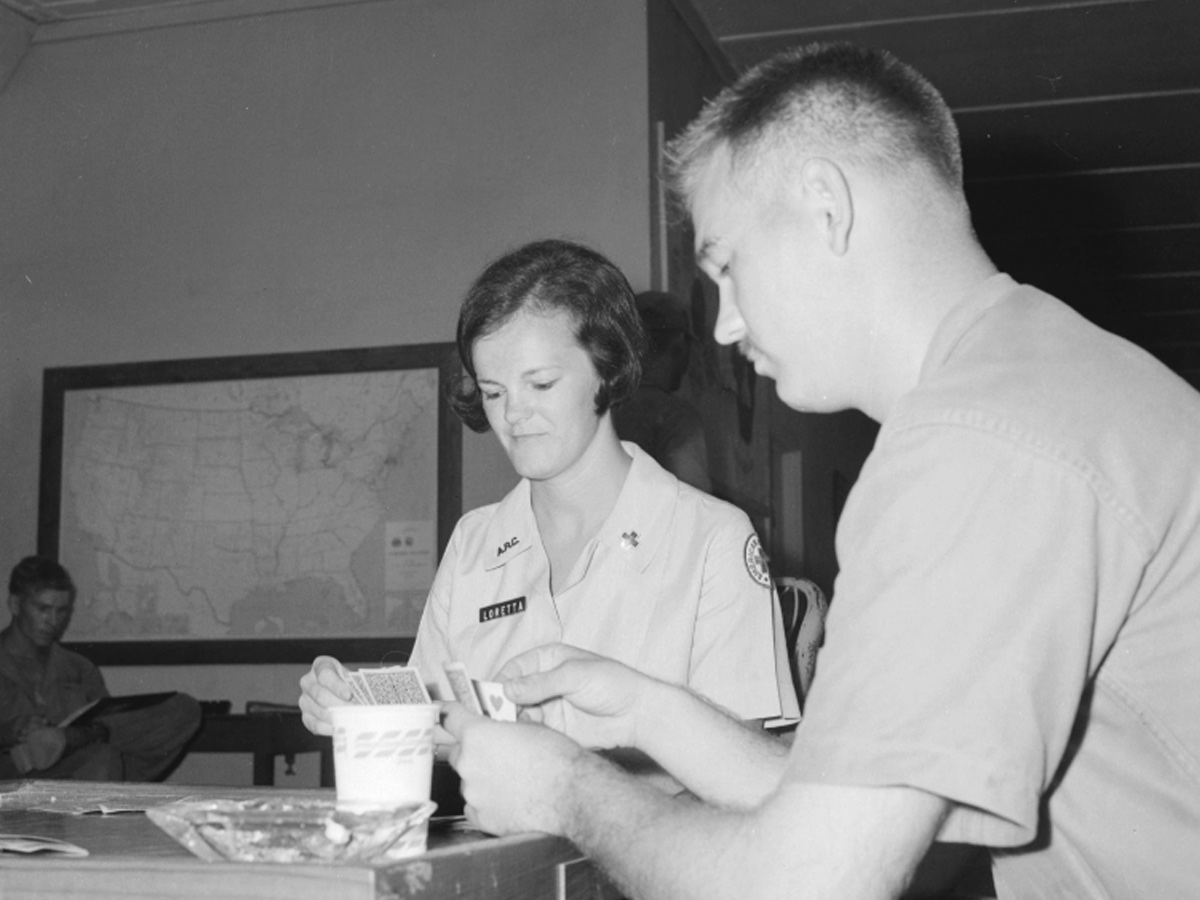
Loretta Clause (a volunteer worker for the Red Cross in South Vietnam) plays cards, talks, etc., with Marines of H&S, 1st Marine Division.
Navy Seal Team 1 Moves Down the Bassac River
Date: November 1967
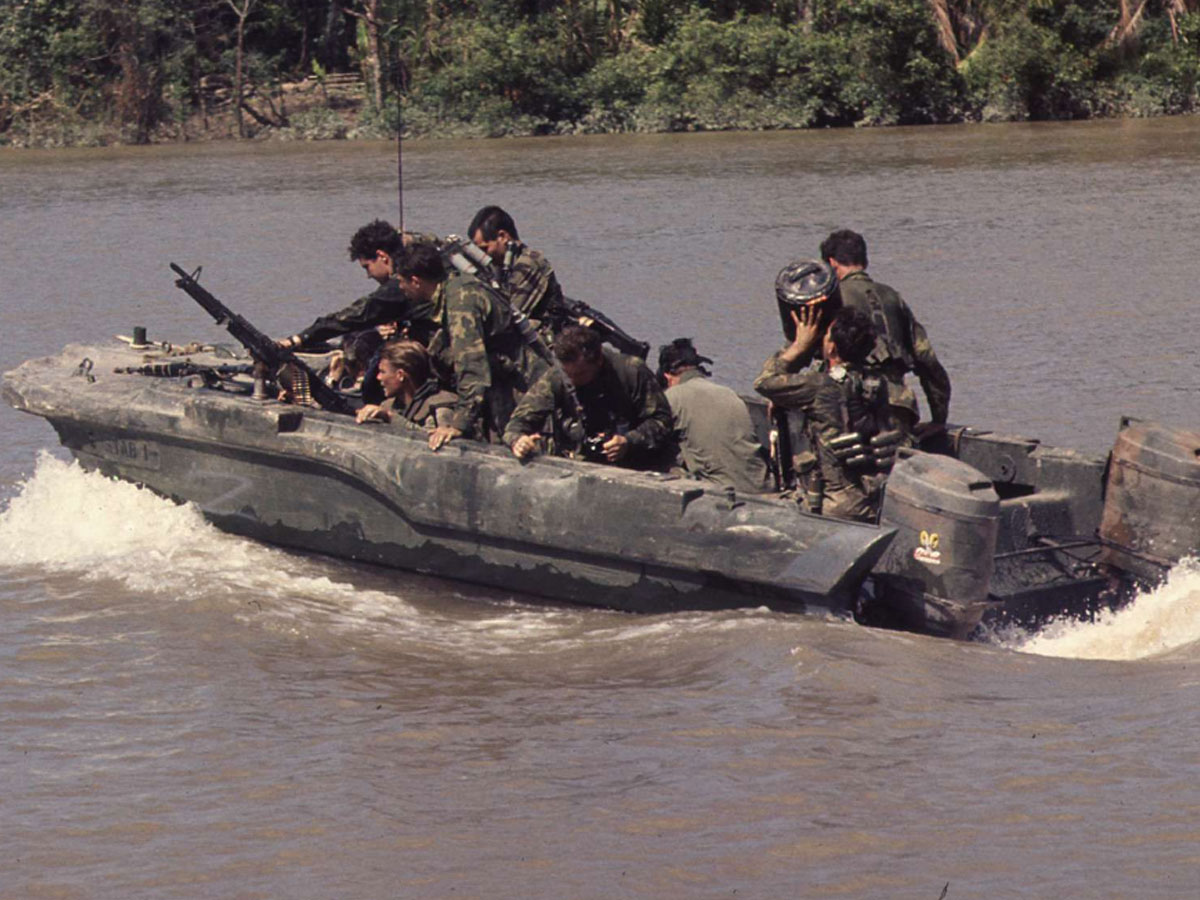
Members of U.S. Navy Seal Team One move down the Bassac River in a Seal team Assault Boat (STAB) during operations along the river south of Saigon.
"Home is Where You Dig It"
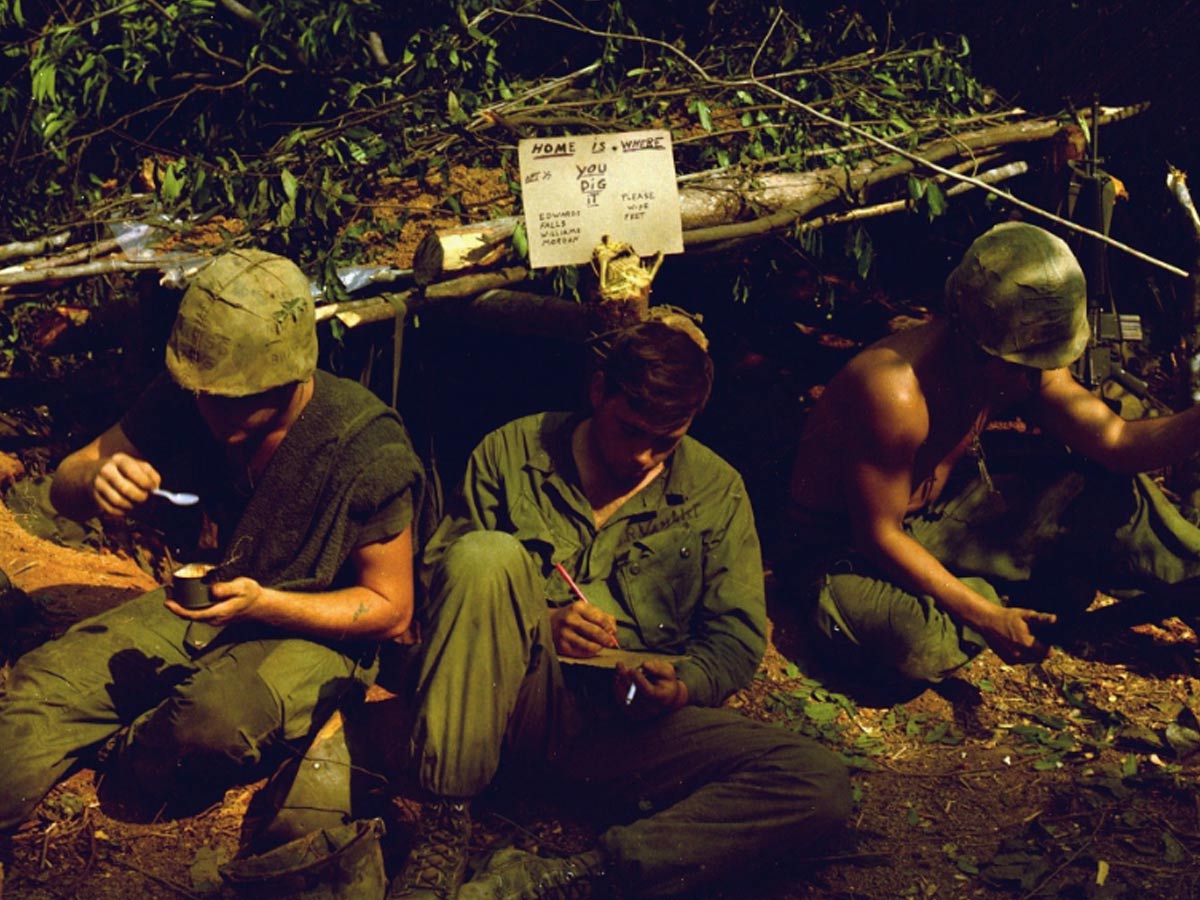
Date: 1968
“Home is where you dig it” was the sign over the fighting bunker of Private First Class Edward, Private First Class Falls and Private First Class Morgan of the 1st Battalion, 7th Regiment, during Operation Worth. The operation involved a significant number of U.S. troops, supported by air power and artillery. They conducted search and destroy missions, ambushes, and patrols to locate and engage Viet Cong forces. While the operation achieved some success in disrupting Viet Cong supply lines, it was also a challenging campaign due to the complex terrain and the Viet Cong’s guerrilla tactics.
Marine Stands Watch During Mass

Date: July 31, 1967
A Marine stands watch in an observation tower as Lieutenant Commander McElroy, the 3rd Battalion, 26th Marines chaplain, holds mass on Hill 950.
Carrying Wounded Soldier Through Swamp
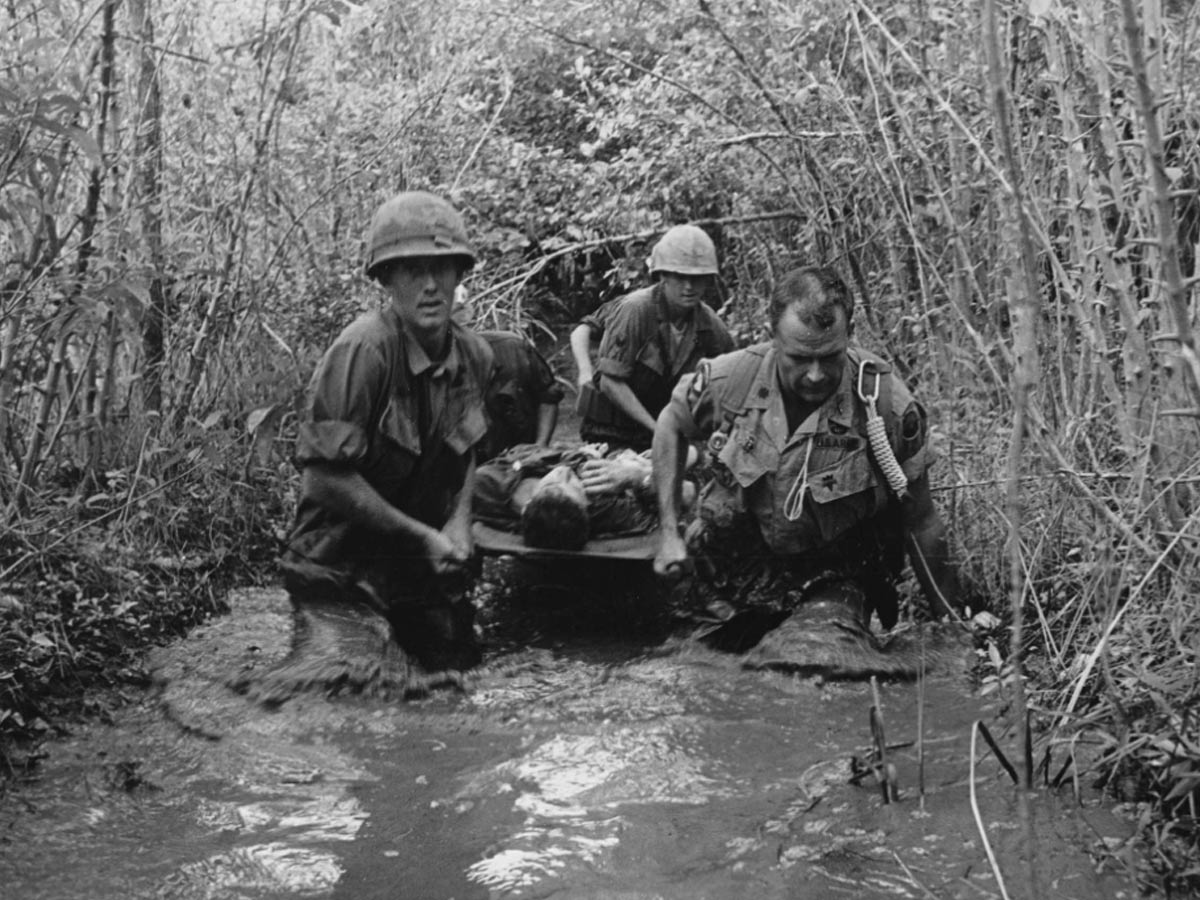
Date: 1969
The specific image location or squad/platoon information for the image is unknown.
Keeping Track of Time Left
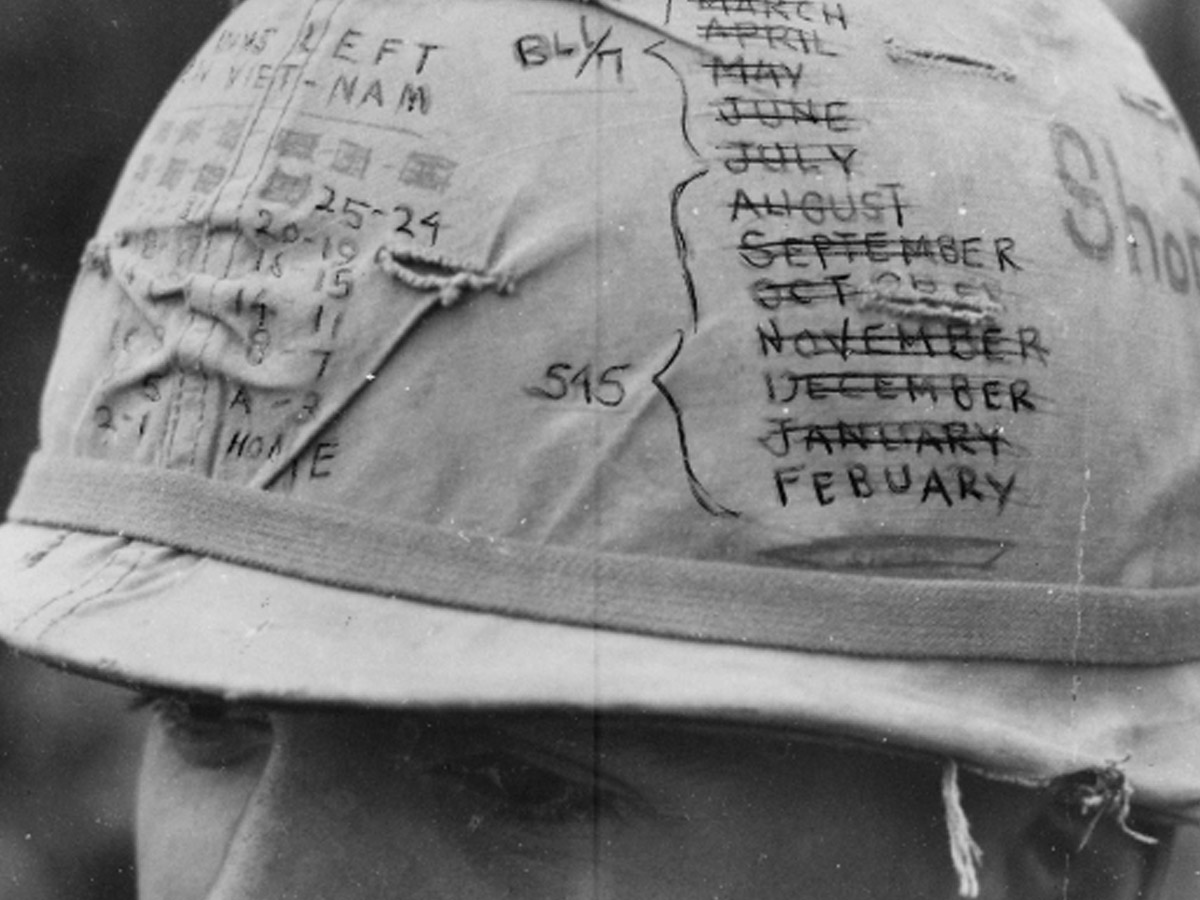
Date: 1968
A Sky Trooper from the 1st Cavalry Division (Airmobile) keeps track of the time he has left on his ‘short time’ helmet, while participating in Operation Pershing. A large number of U.S. troops, supported by air and artillery, conducted search and destroy missions. The operation was marked by heavy fighting, but ultimately resulted in a significant victory for the U.S. military, disrupting Viet Cong operations in the Central Highlands.
Operation "Oregon" Search and Destroy Mission

Date: April 24,1967
An infantryman of Troop B, 1st Reconnaissance Squadron, 9th Cavalry, 1st Cavalry Division (Airmobile) is lowered into a tunnel by members of the reconnaissance platoon as part of Operation “Oregon.” The operation’s main goal was to eliminate Viet Cong forces and destroy their infrastructure. Marines conducted search and destroy missions, discovering and destroying Viet Cong tunnel complexes. Although successful in inflicting casualties on the enemy, the Marines also suffered losses. Despite this operation, the Vietnam War continued, with ongoing battles between the U.S. and Viet Cong forces.
Company Gathers Around a Guitar
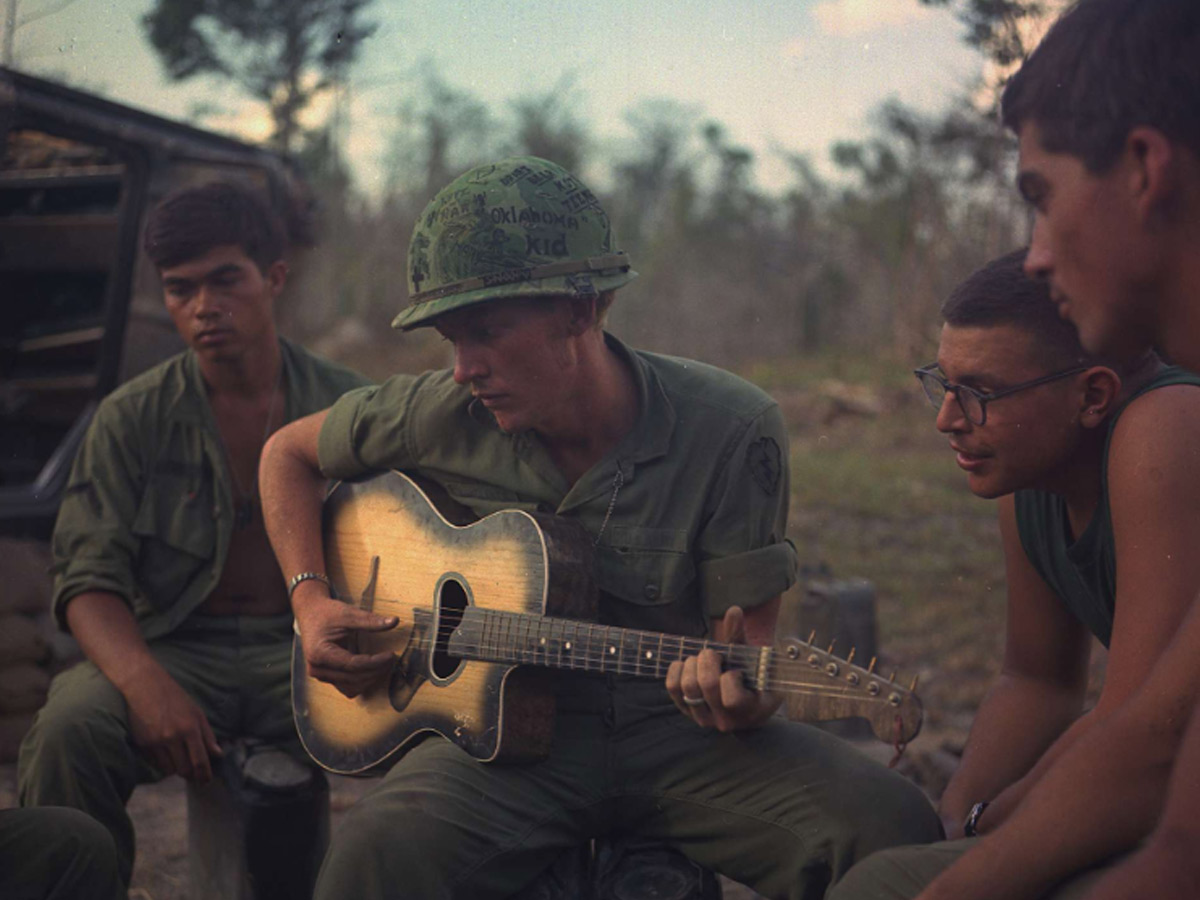
Date: January 1, 1968
Following a hard day, a few members of Company “A,” 3rd Battalion, 22nd Infantry (Mechanized), 25th Infantry Division, gather around a guitar player and sing a few songs during Operation “Yellowstone.” The primary objective of Operation Yellowstone was to disrupt the Viet Cong’s logistical supply lines and infrastructure in the region. The operation proved to be successful in inflicting significant casualties on the Viet Cong and disrupting their activities in the area. However, it was also a costly operation for U.S. forces, with a significant number of casualties.
Marines on an M-48 Tank
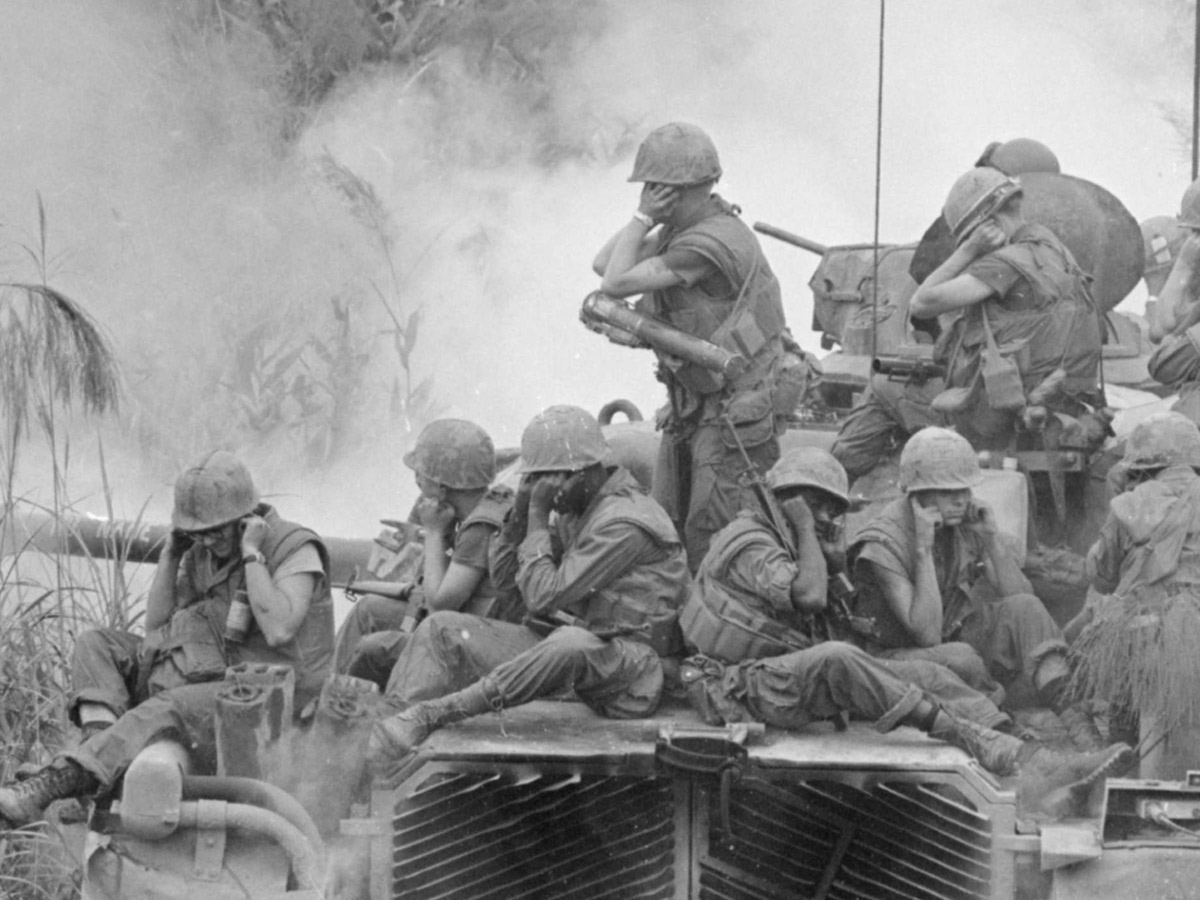
Date: April 3,1968
Marines riding atop an M-48 tank covering their ears as the 90mm gun fires during a road sweep southwest of Phu Bai Combat Base, a former U.S. Army and Marine Corps base in central Vietnam.
1st Royal Australian Regiment Arrive at Vung Tau
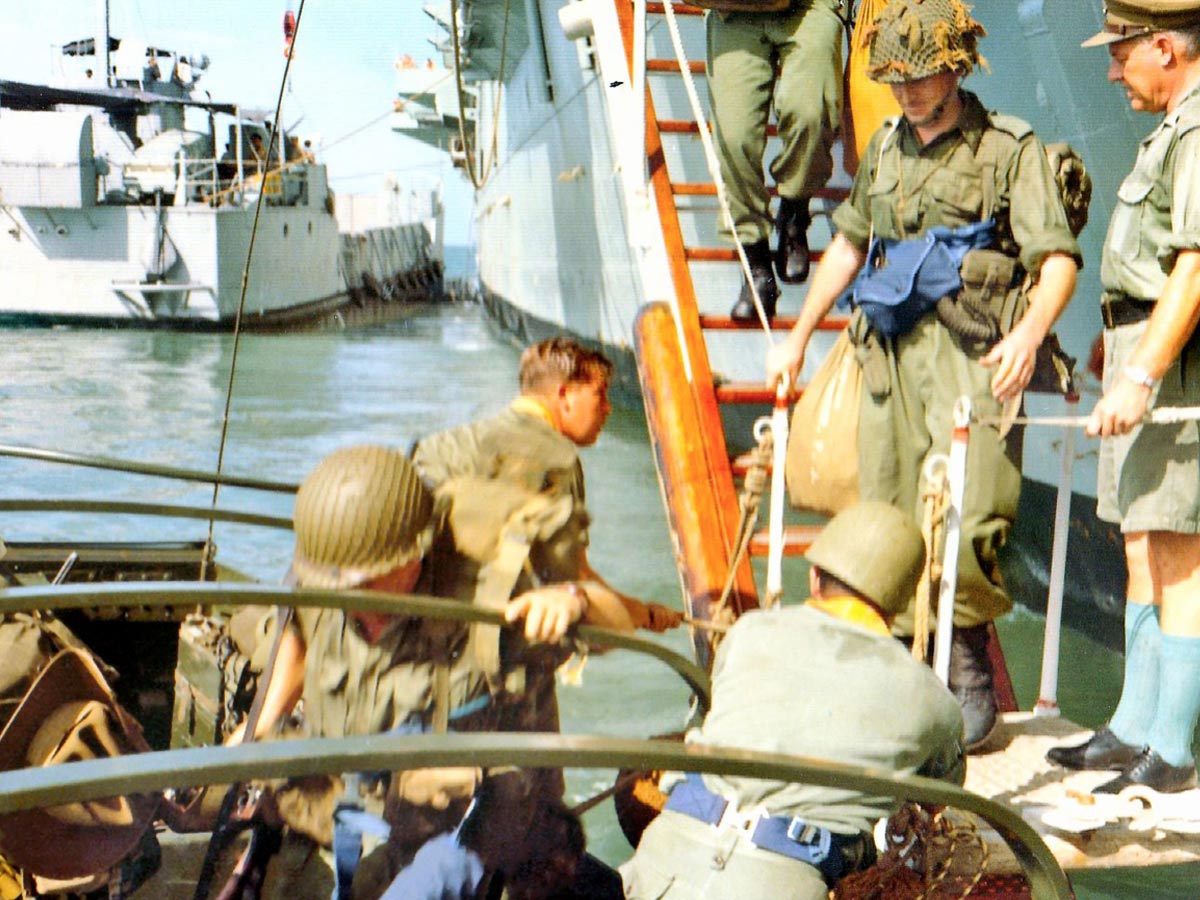
Date: Unknown
Soldiers from the 1st Royal Australian Regiment transfer boats at Vung Tau.
Guard Station at Saigon
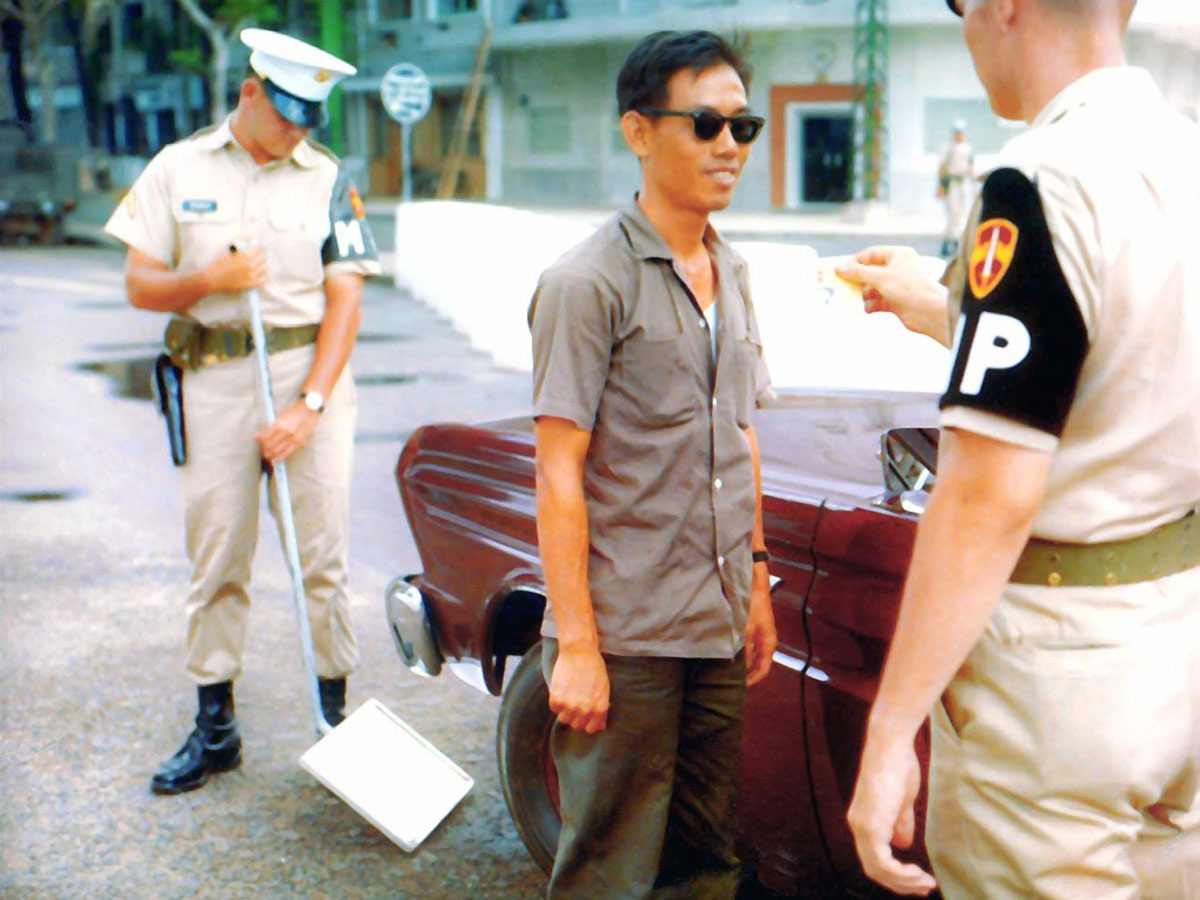
Date: Unknown
Guards inspect the indentification and car of a Vietnamese visitor to a military police in Saigon.
Allied Nations Color Guard in Saigon

Date: April 8, 1965
The inauguration ceremony marking the formal opening of the International Military Assistance Office building (IMAO) of the Republic of Vietnam. The Color Guards represent South Vietnam, the United States, the Republic of China (Taiwan), Australia, the Philippines, the Republic of Korea (South Korea), New Zealand, and Thailand.
Bulldozer at An Khe
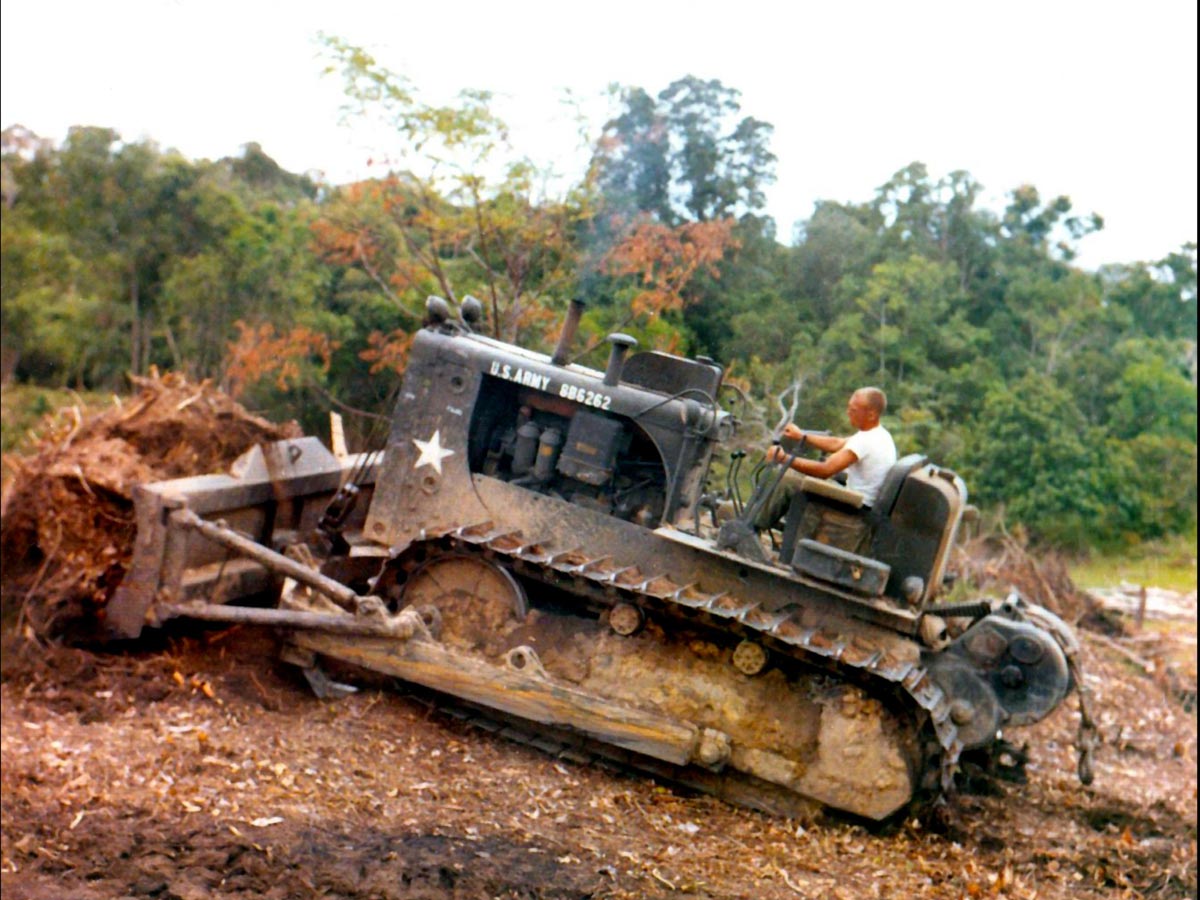
Date: Unknown
A soldier bulldozes trees and other debris out of the way at Camp Radcliff, a strategic U.S. Army base in the Central Highlands region.
1st Calvary Division Arrives at Qui Nhon
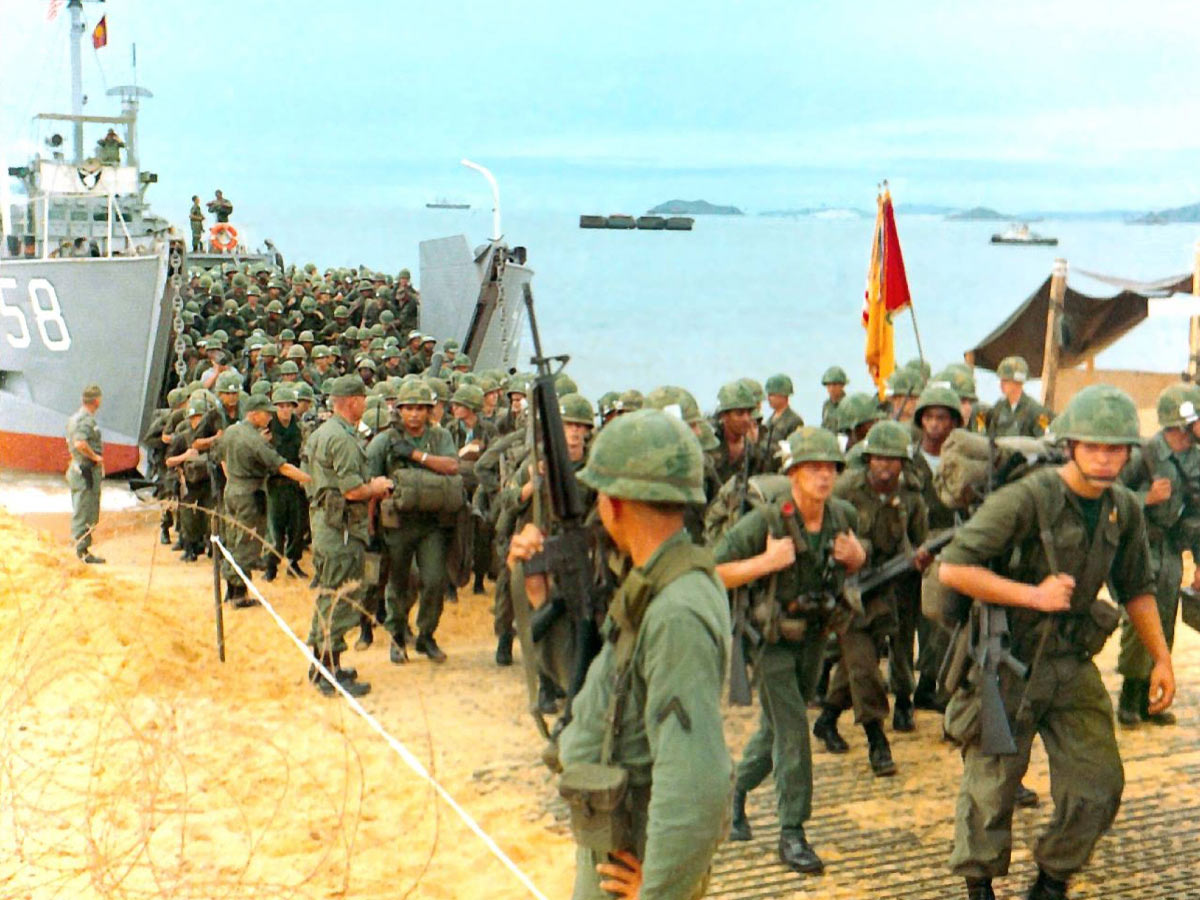
Date: 1966
The 1st Calvary Division disembarks off a Higgins boat at Qui Nhon, South Vietnam.
Huey Flies Over Soldiers Near An Khe

Date: Unknown
A “Huey” helicopter flies over soldiers at Camp Radcliff near An Khe. A “Huey” helicopter is a colloquial name for the Bell UH-1 Iroquois helicopter. It’s one of the most recognizable helicopters in the world, known for its distinctive “teardrop” shaped fuselage and the distinctive “thump-thump-thump” sound of its rotor blades. The Huey gained widespread fame during the Vietnam War, where it became an iconic symbol of American military power. It was used extensively for troop transport, medevac, and providing close air support.
Australians Arrive at Vung Tau

Date: Unknown
Australian soldiers arrive at Vung Tau. The United States used the Vung Tau airbase during the Vietnam War to station Army, Air Force, and Navy units. It was also the main based used by Australian support personnel during the war. Vung Tau’s deepwater port provided excellent access for ships bringing in troops and supplies from Australia.
Huey Crew Prepares for Mission
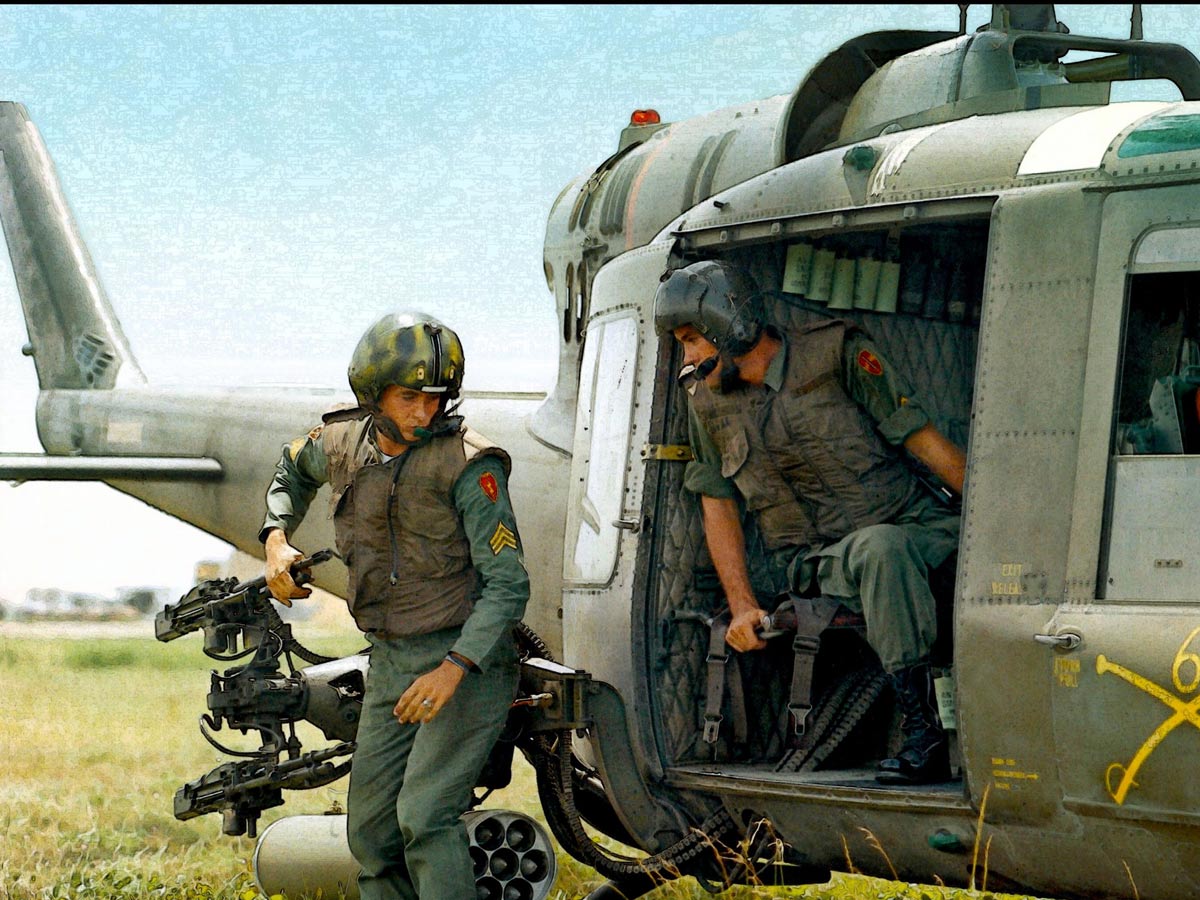
Date: Unknown
Two soldiers prepare a “Huey” helicopter before becoming airborne and heading off on their mission.
Huey Medevac on USS Croatan
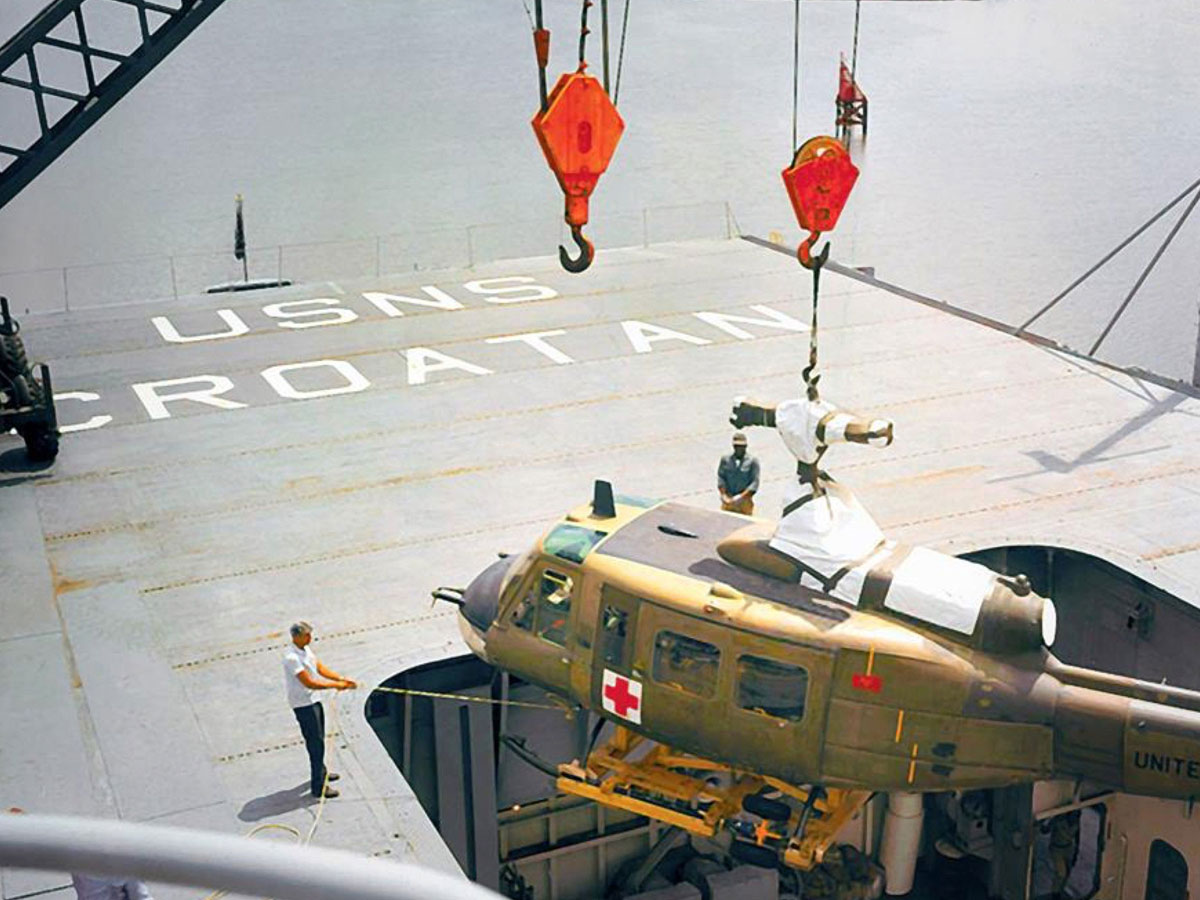
Date: Unknown
Two soldiers maneuver a “Huey” helicopter with the help of a crane, preparing it to be unloaded from a large ship.
Duc My Ranger Training Center
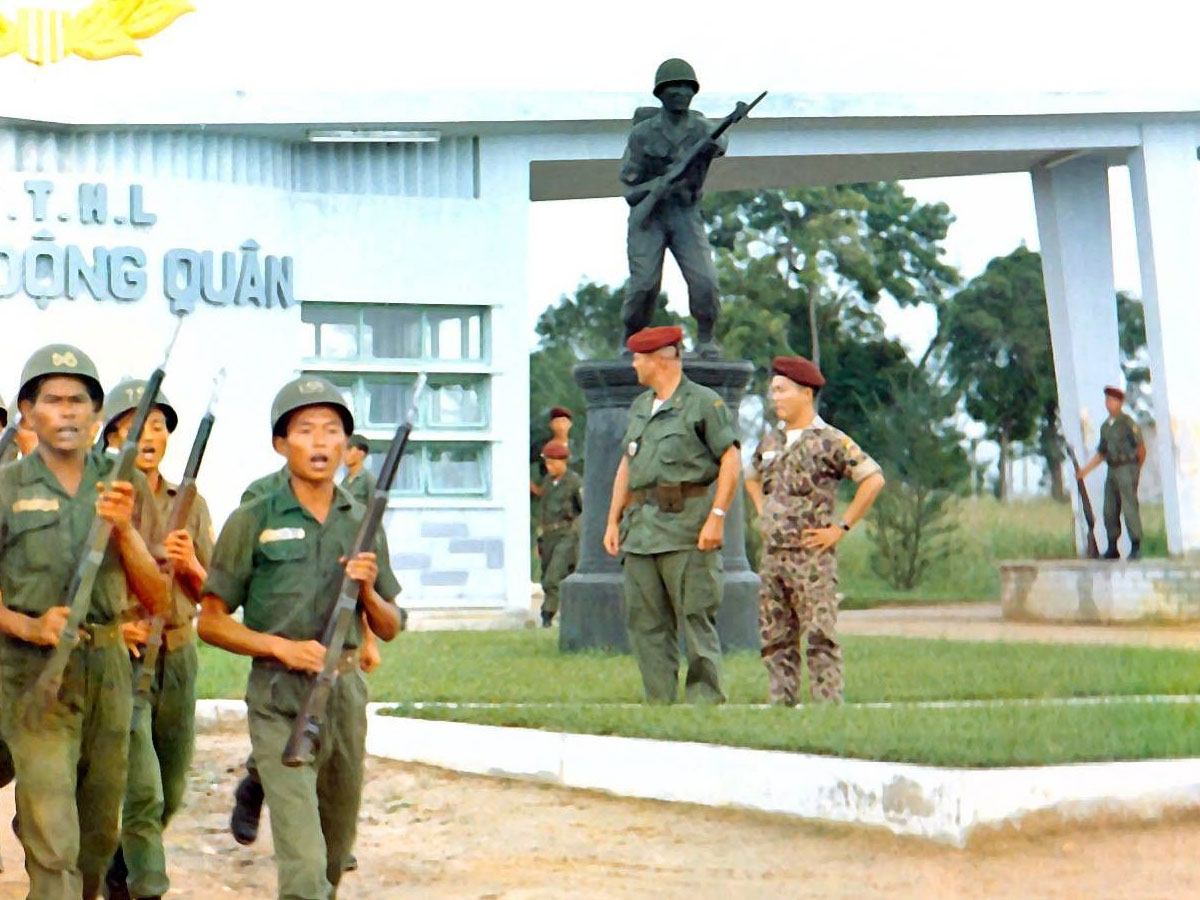
Date: Unknown
Vietnamese soldiers march past officers at the Duc My Ranger Training Center. Duc My was an important training center for the Vietnamese Rangers during the Vietnam War. It was designed to train Vietnamese soldiers in advanced combat skills and tactics, including jungle warfare, patrolling, and ambushes.
Soldiers Prepare for Transport to An Khe
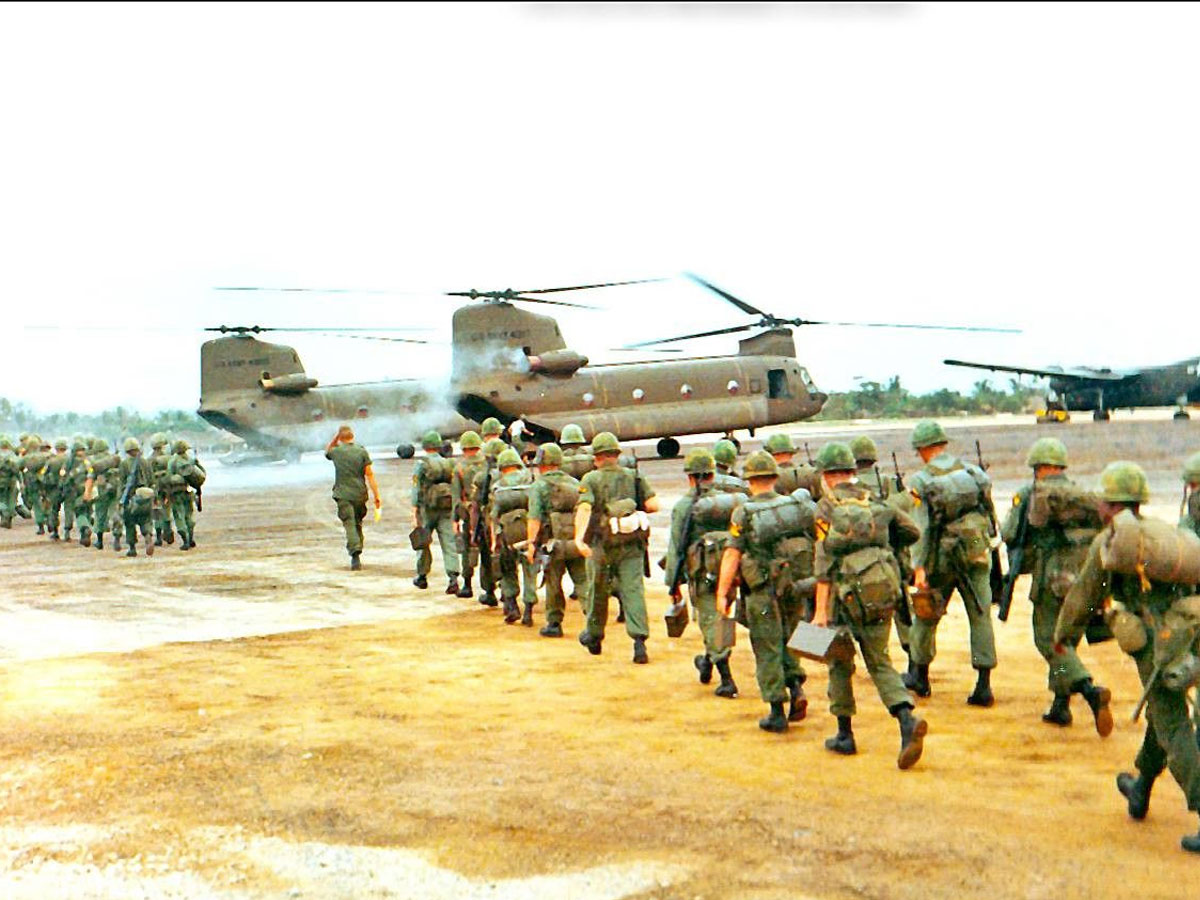
Date: Unknown
Soldiers line up to board a Chinook helicopter for transport at Camp Radcliff in An Khe.
Students at Duc My Ranger Training Center
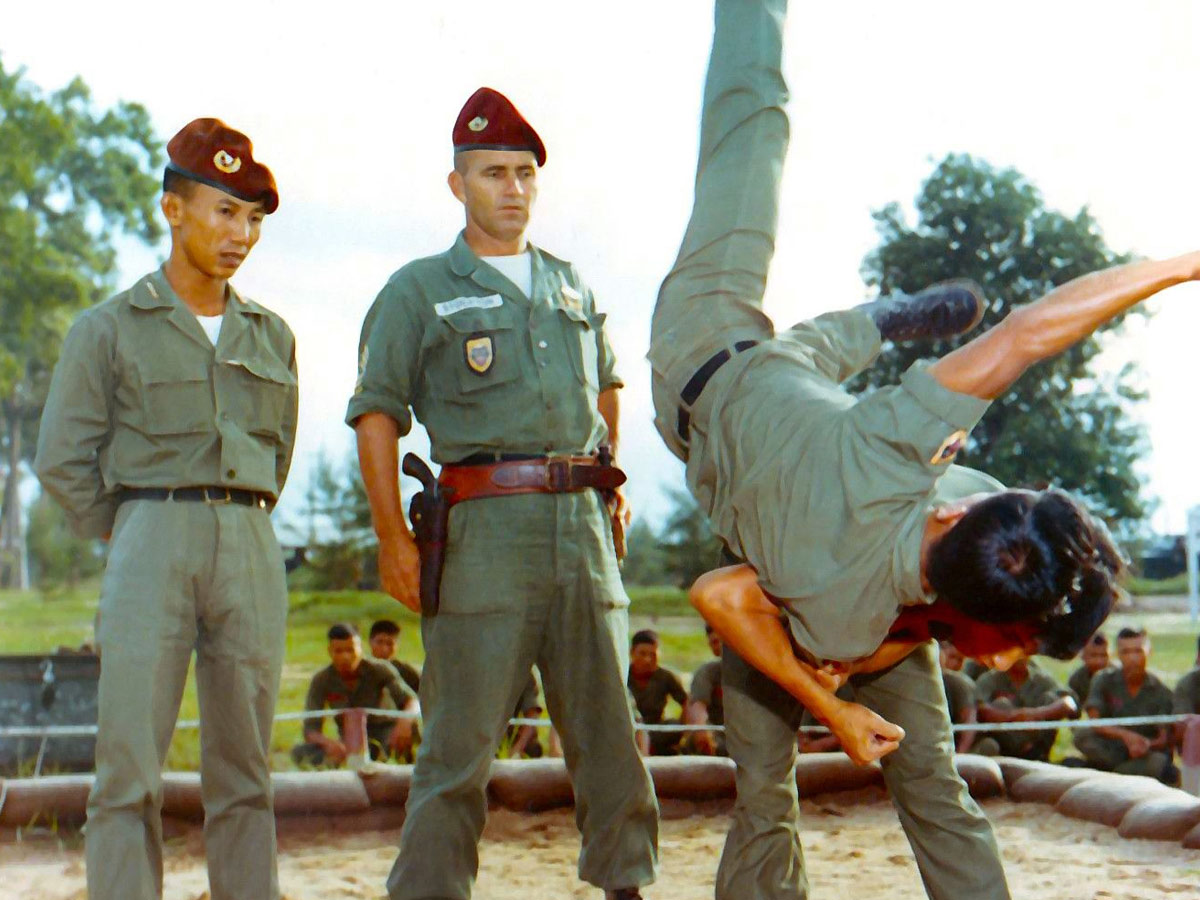
Date: Unknown
Vietnamese soldiers engage in combat training in front of officers at the Duc My Ranger Training Center.
Helicopters Fly Over Soldiers in War Zone D
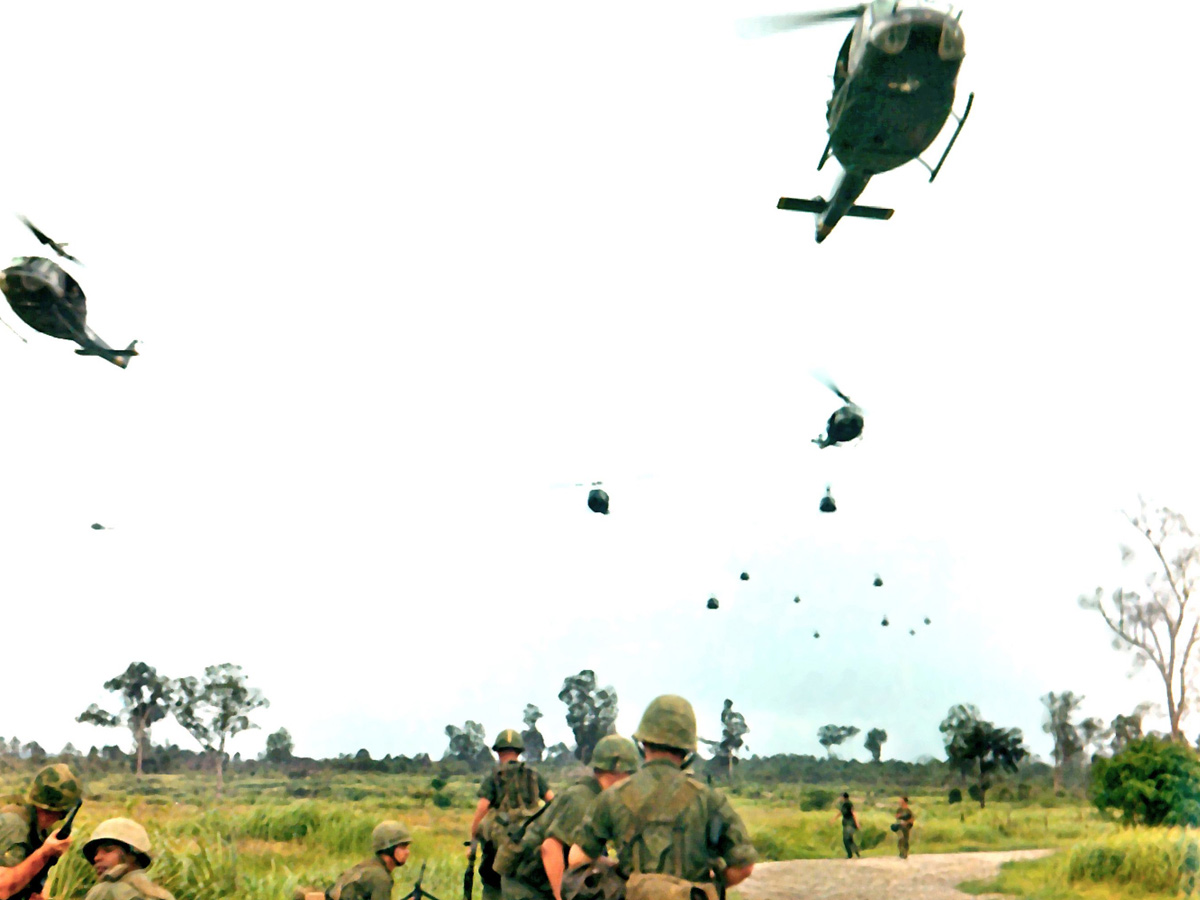
Date: Unknown
“Hueys” fly over Soldiers in the War Zone D area of III Corps. The helicopters often provided support for soldiers along the ground.
Vietnamese Solider Load Supplies
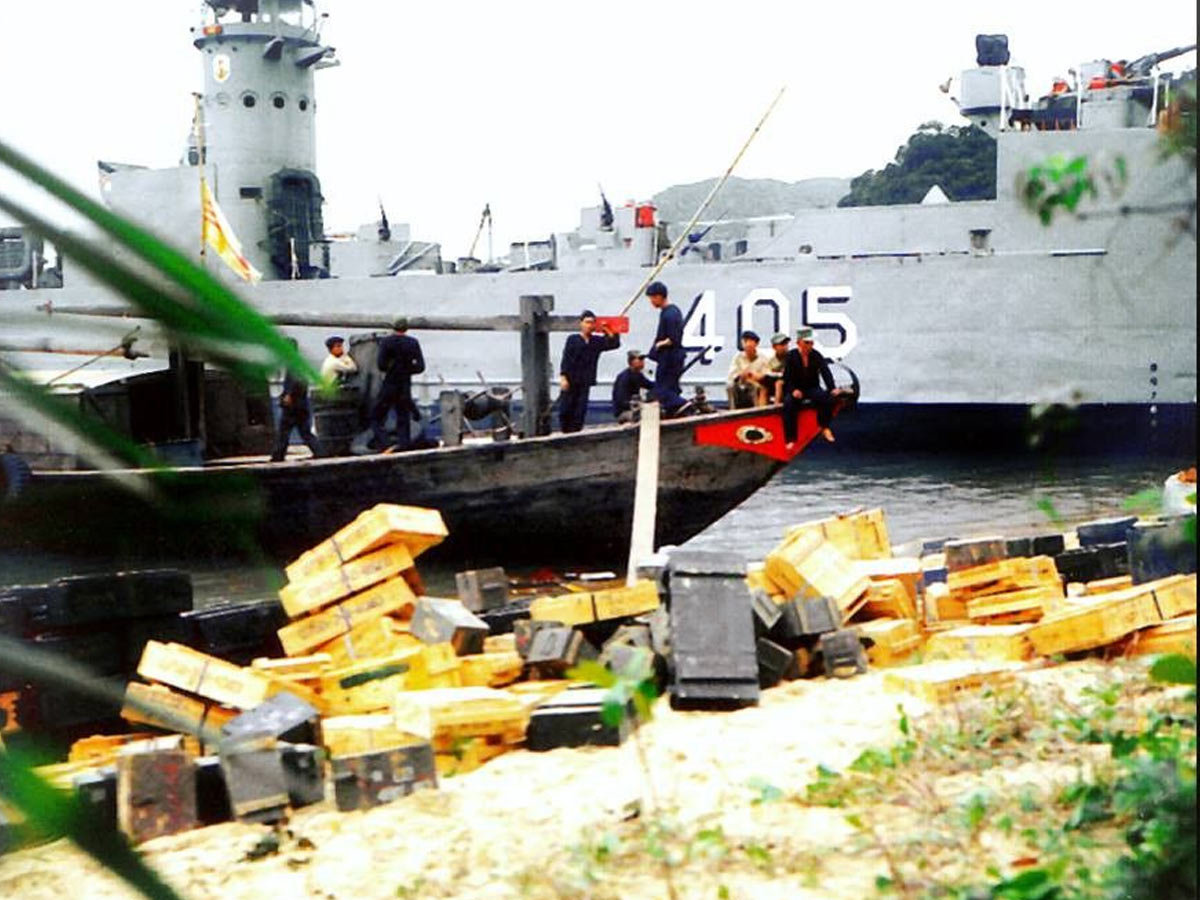
Date: Unknown
Vietnamese soldiers load supplies along the beach onto a boat to be transported to a larger ship in the distance.
Class at Duc My Ranger Training Center
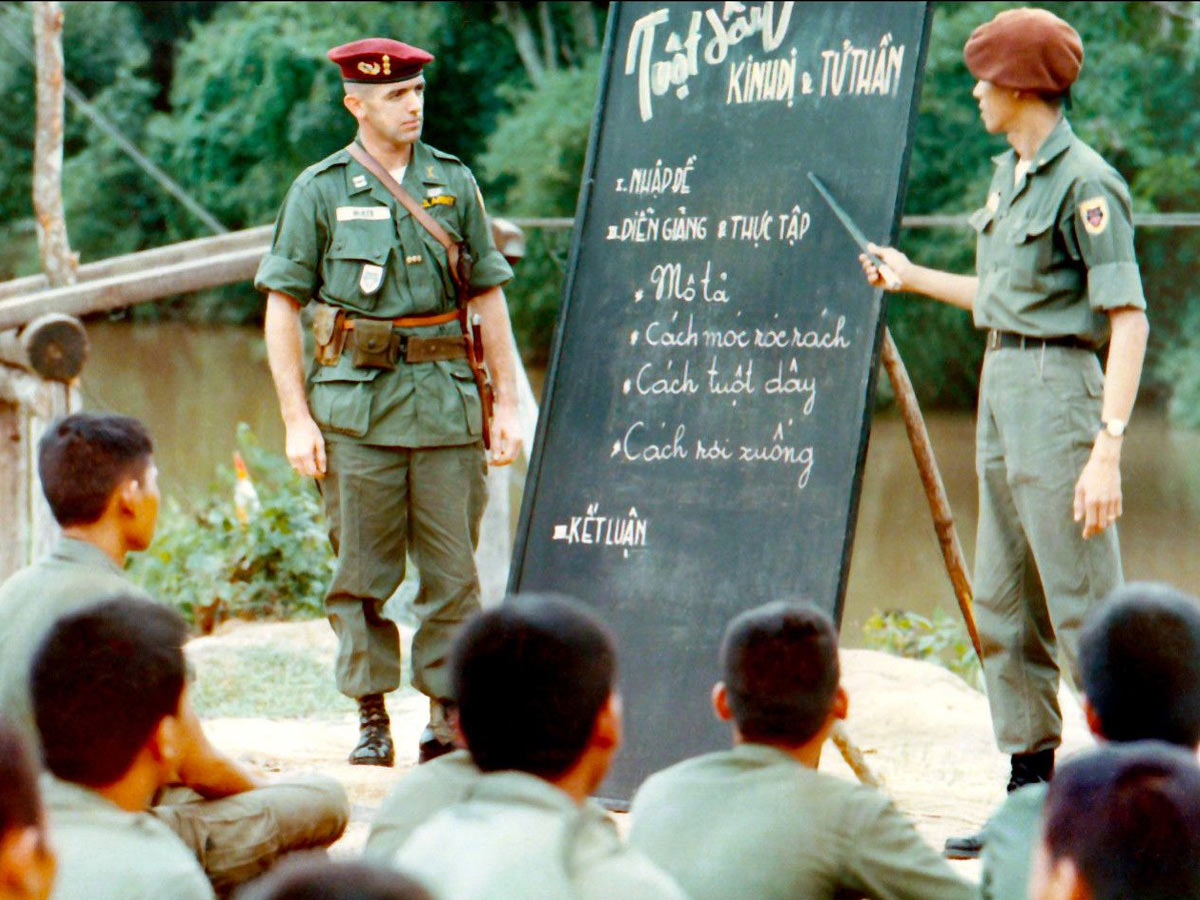
Date: Unknown
Vietnamese soldiers listing to a training seminar put on by officers at the Duc My Ranger Training Center.
Army Photo Crew Interview Soldier
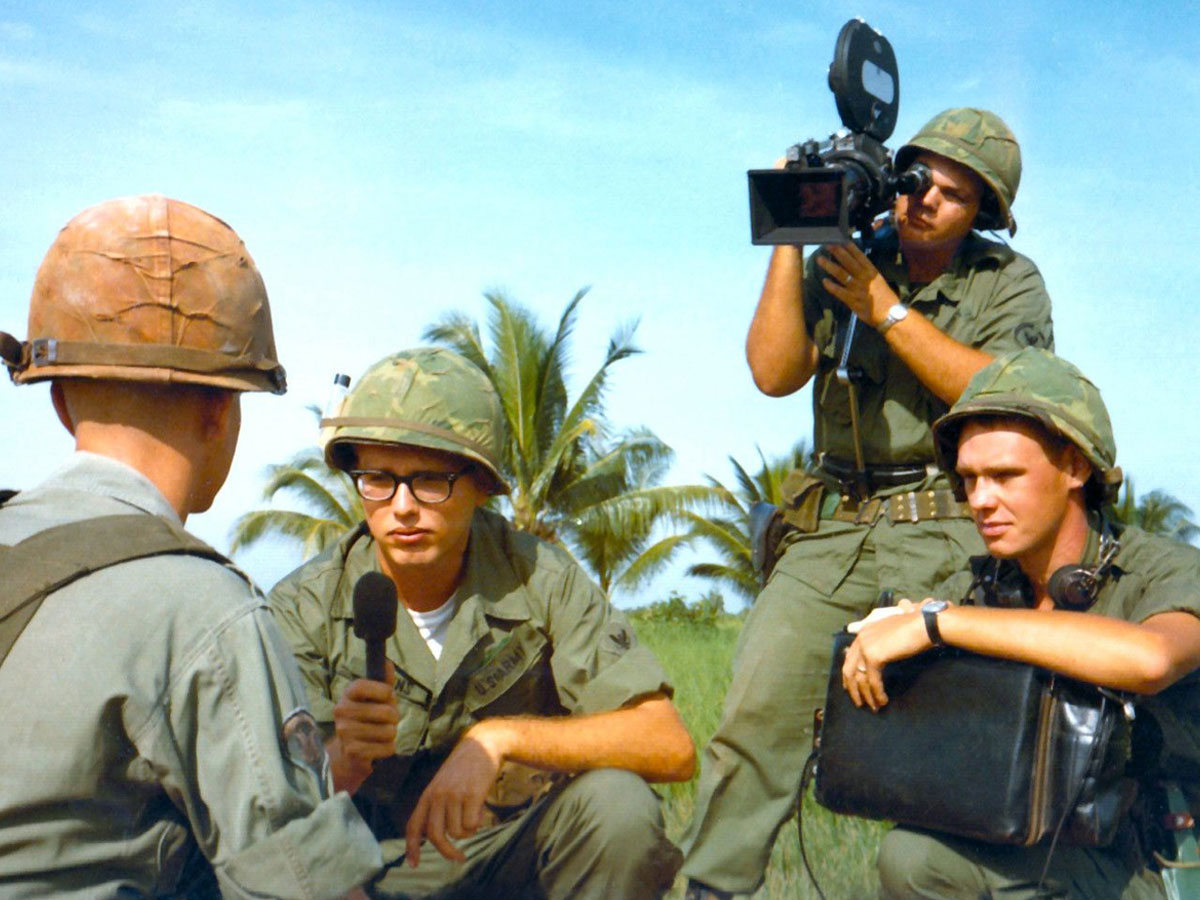
Date: Unknown
An Army Photo Crew interviews a soldier about his experiences in the field.
Soldiers Receive Mail
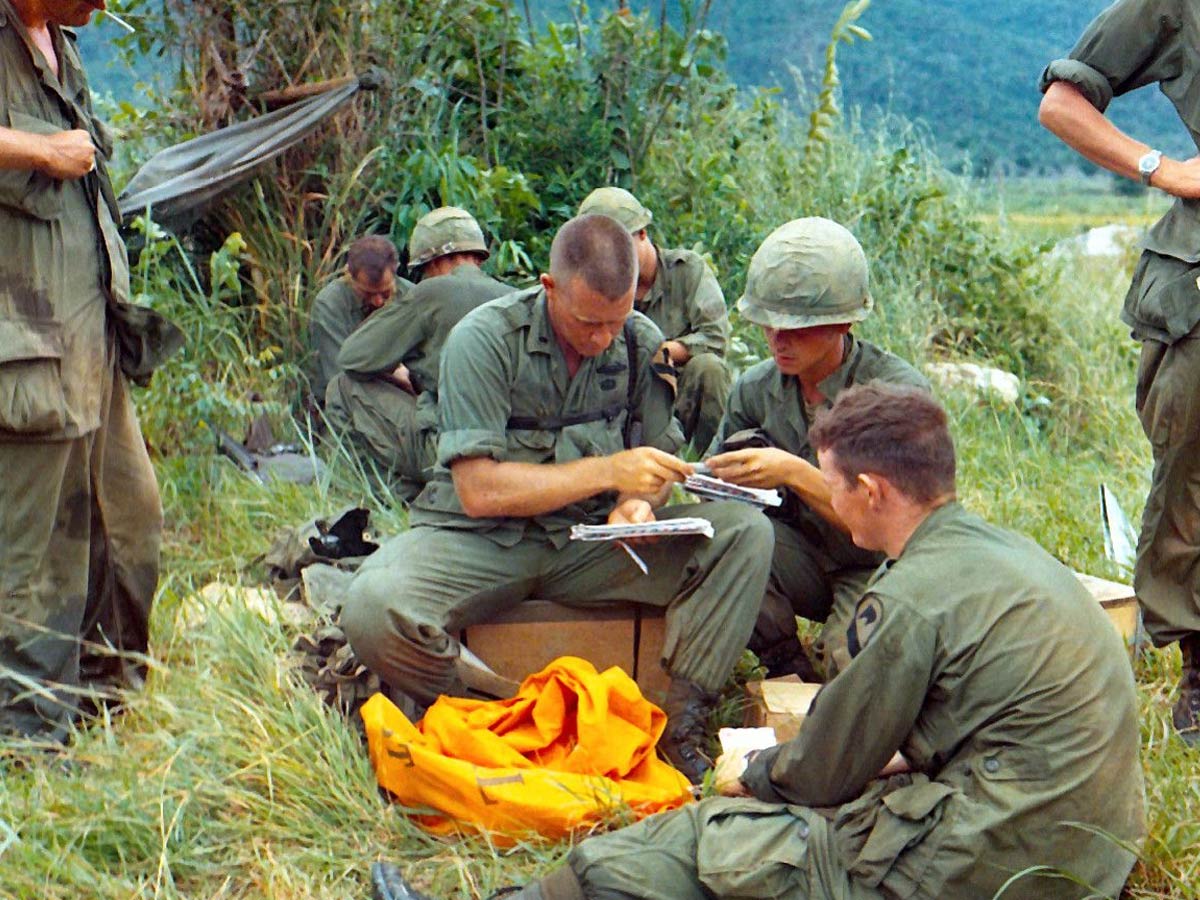
Date: Unknown
Soldiers open, read, and respond to mail while on a break.
Thanksgiving Dinner

Date: Unknown
Soldiers prepare a Thanksgiving meal out in the field while they are away from home on the holiday.