


Is Celery Juice Really as Healthy as it Seems?
The juicing trend has become increasingly popular over the last few years. When celebrities aren’t drinking (aka selling) skinny/detox tea on Instagram, they’re usually sipping on some green juice. Celery juice, in particular, has gotten a bit of a reputation for its various health benefits.
The claim—stemming from Instagram influencers and celebrities, among others—is that celery juice has properties that can cure everything from digestive issues to strep throat to obesity. Just a quick reminder—none of these claims come from the scientific or medical fields. So from where did this information appear? It came from “Medical Medium” Anthony Williams; a gentleman who is known for speaking to spirits—who has absolutely zero credentials in either the science or medical fields.
Williams’ recommendation is that we drink pure celery juice on an empty stomach because it’s supposedly a miracle juice that can heal chronic illnesses and aid in digestion. But is celery juice really as healthy as it seems? We’re breaking down the science behind it, the pros, and the cons, to answer that question for you.
Disclaimer: The information in this content is for general informational purposes only, not a substitute for professional medical advice. Always consult your doctor before making any changes to your lifestyle.
The Verdict: Is Celery Juice Really as Healthy as it Seems?

Look—celery is good for you whatever form it’s in. Just one cup contains just 14 calories, 1 gram of protein, 2 grams of fiber, and at least 6% of our daily value of potassium at 263 milligrams. Although celery has been studied and found to have antioxidants, all other vegetables also contain antioxidants. More often than not, the people who swear by the effects of celery juicing have also made many other, healthier choices in their lives. Although many people would fight us tooth and nail on this, there just isn’t enough science or research to back up the Medical Medium’s claims that celery juice is a miracle elixir.
Making Your Own Celery Juice

There are hundreds of celery juice recipes out there on the interwebs that you could choose from or you can just use the Medical Medium’s recipe: A large bunch of celery and a juicer or blender. That’s it. No frills, no spices, no seasonings, and definitely no additives. Just run the bunch of celery through the juicer and drink up! However, if you’re using a blender it is recommended that you chop the celery first and then run the juice through a metal mesh strainer before drinking.
Before You Consume Celery Juice…

Even the Medical Medium’s own Celery 101 blog has a disclaimer that states “Nothing contained in or accessible from this blog should be considered to be medical advice, diagnosis, treatment, or prescribing, or a promise of benefits, claim of cure, legal warranty, or guarantee of results to be achieved.” Therefore, before beginning any new dietary treatment, you should always consult with your physician and check to make sure you’re not taking any medications that could negatively interact with it.
Con: Celery is a Regular on the "Dirty Dozen" List

According to Eatingwell.com, each year the Environmental Working Group (EWG), a nonprofit organization, releases a Shopper’s Guide to Pesticides in Produce that lists fruits and vegetables with the highest and lowest pesticide residues. High volumes of pestiside residue has this vegetable on the Environmental Working Group’s Dirty Dozen list of most contaminated produce.
Con: You Don't Get Celery's Natural, Insoluble Fiber

While some soluble fiber will remain throughout the juicing process, we lose the insoluble fiber and we need both for a balanced and nutritional diet. Very specifically, insoluble fiber is what assists us with digestion and healthy bowel movements. We get the fiber we need by eating our fruits and vegetables; therefore, juicing celery can put a person at risk for not getting enough fiber into their diet.
Pro: Absorption of Nutrients

The high amount of natural sodium that is found in celery juice has been known to help us absorb nutrients from the foods that we will eat for the rest of the day. In addition, the salts found in celery juice may also increase and strengthen our liver’s ability to produce bile, therefore lowering our overall cholesterol levels.
Con: Juicing Costs $$$

Just to reap the regular health benefits of ‘juicing,’ the “Medical Medium” suggests that we drink at least 16 ounces per day. If one has a chronic illness, the medium then suggests we drink at least 24-32 ounces per day. That is two large bunches of celery per day—adding up to about $1,000 in spending per year. We can definitely think of better things to do with $1,000!
Pro: Aids Digestive Health

Although there is no scientific research that shows the benefits of celery juicing in humans—here’s what we do know. In 2009, a study found that some compounds in celery called apigenin and quercetin can improve digestion by relaxing your gut to make bowel movements easier. In addition, celery juice can aid in stimulating the production of stomach acid, which in turn helps relieve symptoms of indigestion, bloating, and heartburn.
What Does the Research Say?
That’s the funny thing—there isn’t any. As recently as October of 2019, assistant research scientist in nutrition from the University of California, Davis, Rachel E. Scherr, told the New York Times, “There’s no scientific evidence to support any of the claims being made.” Because celery juice is approximately 94% water, other nutritionists believe that better hydration could be the factor that has celery ‘juicers’ extolling the virtues of this practice.
The Celery Juice Craze
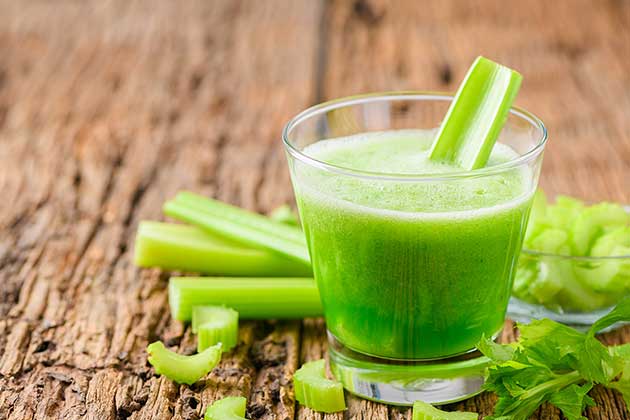
Celery juice has been praised by celebrities for its health benefits for several years now, but experts have begun voicing their concerns. One registered dietician, Abby Langer, based in Toronto, wrote that, “there is absolutely nothing remarkable about celery juice” on her blog and called the craze “the epitome of [] pseudoscience.” So what’s the truth?