
Chickenpox Causes
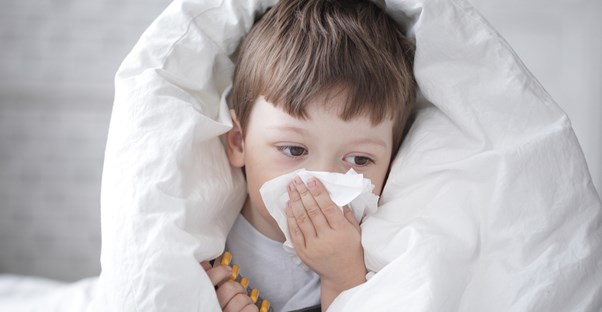
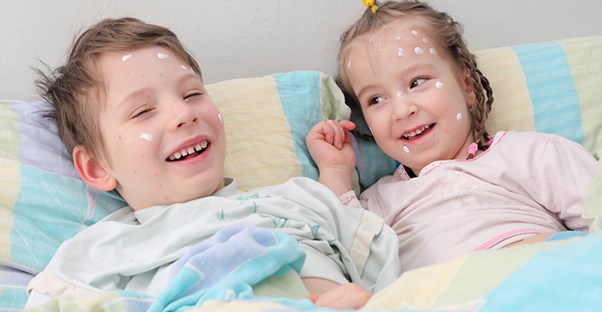
Chickenpox is a temporary, but highly infectious disease that commonly affects children under the age of 12. The infection begins with mild flu-like symptoms, including fever and headaches. Eventually, a rash breaks out on the face, chest, and back. It starts as itchy, raised bumps that turn into fluid-filled blisters, which break open and turn into scabs. There are several factors that cause the spread of this infection.
Understanding the Varicella-Zoster Virus
Chickenpox is caused by the varicella-zoster virus, a type of herpes virus. The varicella-zoster virus is responsible for two diseases: chickenpox and shingles. Once afflicted with chickenpox, the virus stays within the body, and in the nerves, specifically. In the majority of cases, after a person has chickenpox they acquire lifelong immunity to it, but the varicella-zoster virus can eventually re-emerge as shingles, a similarly painful skin rash.
Transmission Via Direct Contact
The chickenpox virus spreads through direct contact with someone who is infected in the following ways:
- Through the air: An uninfected person can breathe in virus particles released into the air by a cough or sneeze.
- Touching: Skin to skin contact with someone who is currently infected is another common way the virus spreads.
- Proximity: An uninfected person can be exposed to the infection when talking face-to-face with someone who is infected for more than 15 minutes.
- Shingles exposure: People with shingles can transmit the varicella-zoster virus to people who have never had chickenpox and aren’t vaccinated. The virus will show up in the unvaccinated person as chicken pox.
High Risk Chickenpox Patients
Chickenpox is most commonly recognized as a childhood condition. Thanks to the varicella vaccine developed in the 1990s, however, chickenpox can be prevented even within this age group. Generally, if infected, the disease is mild for healthy people, but for some it can be serious and lead to complications. In order to prevent severe complications, antiviral medicines may be prescribed. Those at risk for contracting a more serious case include:
- Infants whose mothers have chickenpox at time of delivery
- Adolescents and adults older than 12
- Women who are pregnant
- People who are have weak immune systems
- People undergoing chemotherapy or who have cancer
- People who have HIV/AIDS
- People who are already ill
- People who take drugs that repress immune system